August 2, 1944
Messerschmitt Bf 109 G-8 (WNr. 200040)
" La Chasse ", Combourg (35)
(contributors :Jean-Louis Roba, Frédéric Hénoff, Daniel Dahiot, Philippe Dufrasne)
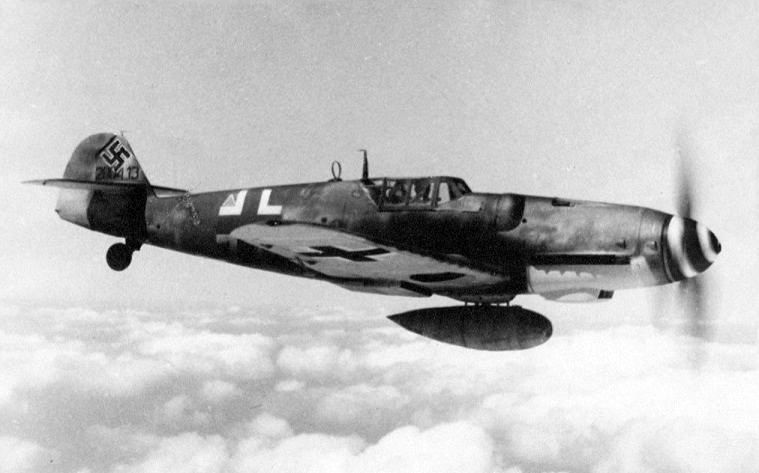
A Messerschmitt Bf. 109G-8 (W.Nr 200413) in August 1944
(photo : source and author unknown)
Pilot
Oberfeldwebel Alois LANDSMANN
Nahaufklärungs-Gruppe 13, 3. Staffel (3rd Squadron of Reconnaissance Group No. 13)
born on June 7, 1915 in Sulzbach-Regensburg,
died on November 25, 1944.
Mont d'Huisnes, plot 11, grave 133.
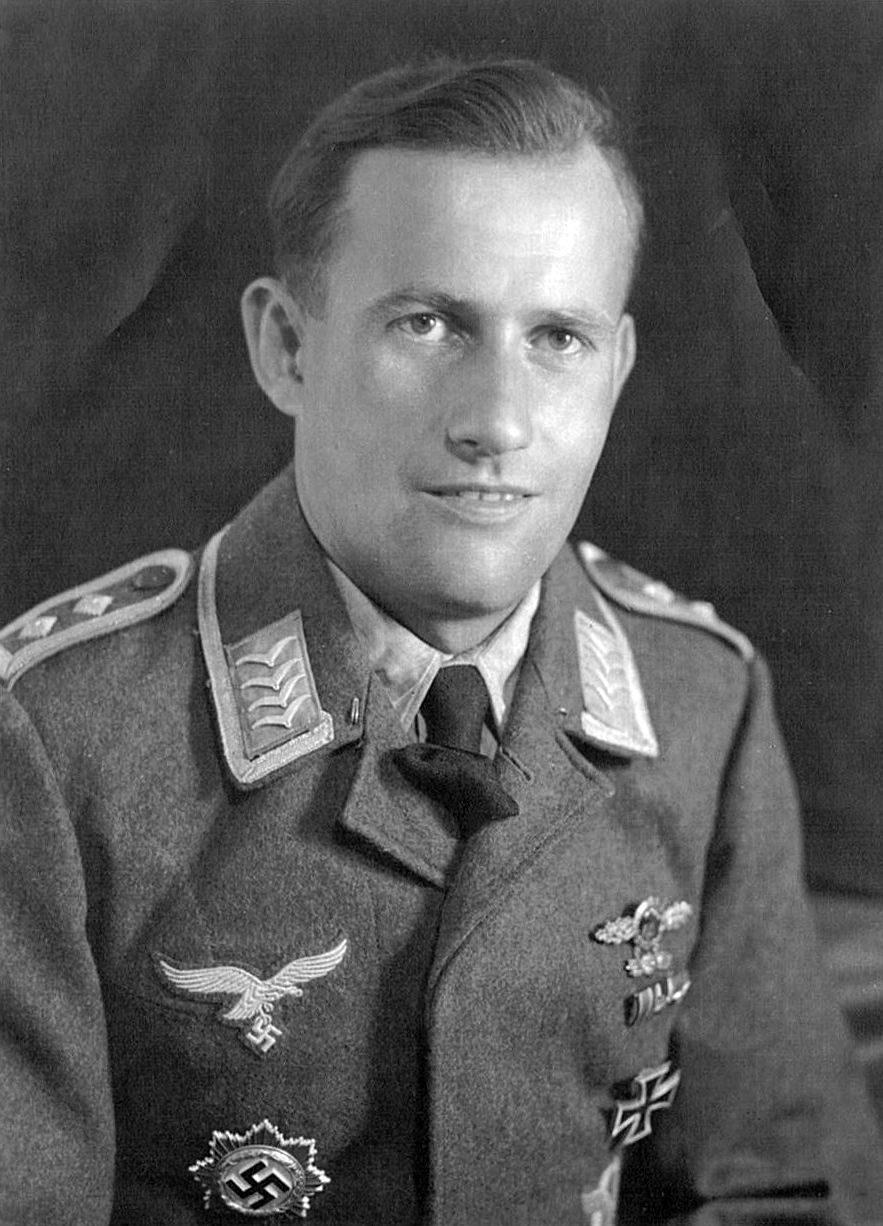
Photo : S.M. collection (Deutschland)
THE STORY
(by Frédéric Hénoff).
During the Allied landings in Normandy, Nahaufklärungsgruppe 13 [NAGr. 13 or Close Reconnaissance Group 13] was commanded by Hauptmann Henning von Kamptz, and his 3./NA Gr. 13 [3rd Squadron] was under the command of Staffelkapitän, Hauptmann Gerhard Dickenbrock. Among the squadron's notable achievements was taking the first photographs of the Allied invasion fleet on the morning of June 6, 1944, by two of the unit's aircraft. This squadron was initially stationed at Laval airfield, but due to its exposed location, it moved on June 20 to a field near Corné, in Maine-et-Loire. The pilots' quarters were located in a castle on a large estate near the airfield. The Staffel was equipped with Messerschmitt Bf 109G-8s, the " tactical reconnaissance " version of the fighter, most of which were fitted with the M.W.50 (methanol/water injection) power boost device. However, like many G-8s, these aircraft were likely no longer equipped with the engine-mounted cannon, in order to save valuable weight.
On August 2nd, advanced elements of the U.S. Third Army were progressing towards Rennes, and as the situation was evolving by the hour, the German High Command requested a reconnaissance of the area in order to take the necessary precautions. Oberfeldwebel Alois Landsmann was assigned to a sortie in the Rennes-Pontorson-Dol-de-Bretagne-Saint-Malo sector to gather intelligence and photographs, which would then be transmitted to the Stab (headquarters) of NAGr. 13, then stationed in Chartres. Alois Landsmann took off in a Bf 109 G-8, Werk-Nr. 200040 ; he did not return. The German pilot was likely the victim of P-47Ds from the 387th Fighter Squadron - 365th Fighter Group, led by Captain Arlo C. Henry, on a mission in the sector between 1:30 pm and 2:50 pm, and who mention in their report a Bf 109 in a fatal dive towards the ground.
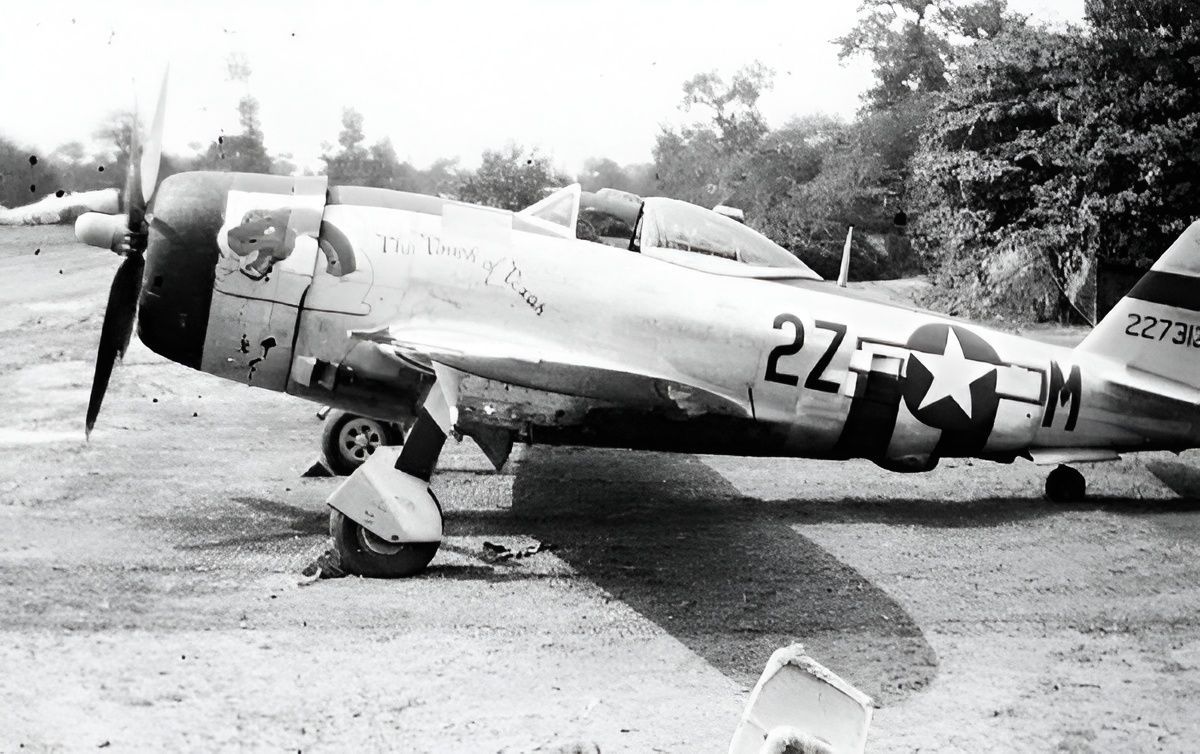
Republic P-47D-27-RE Thunderbolt - Robert L. Saferite was flying this aircraft on August 20, 1944, when it crashed in Normandy and then was captured.
It is possible he was piloting this aircraft on August 2, 1944.
Photo: USAAF - Public Domain
The Americans indicate having seen a group of 11 Bf 109 fighters (this could be the escort assigned to protect reconnaissance aircraft or a group of aircraft changing airfields, as was common during this period) heading west which, as 3 P-47D Thunderbolts engaged them, dived towards the ground to escape south.
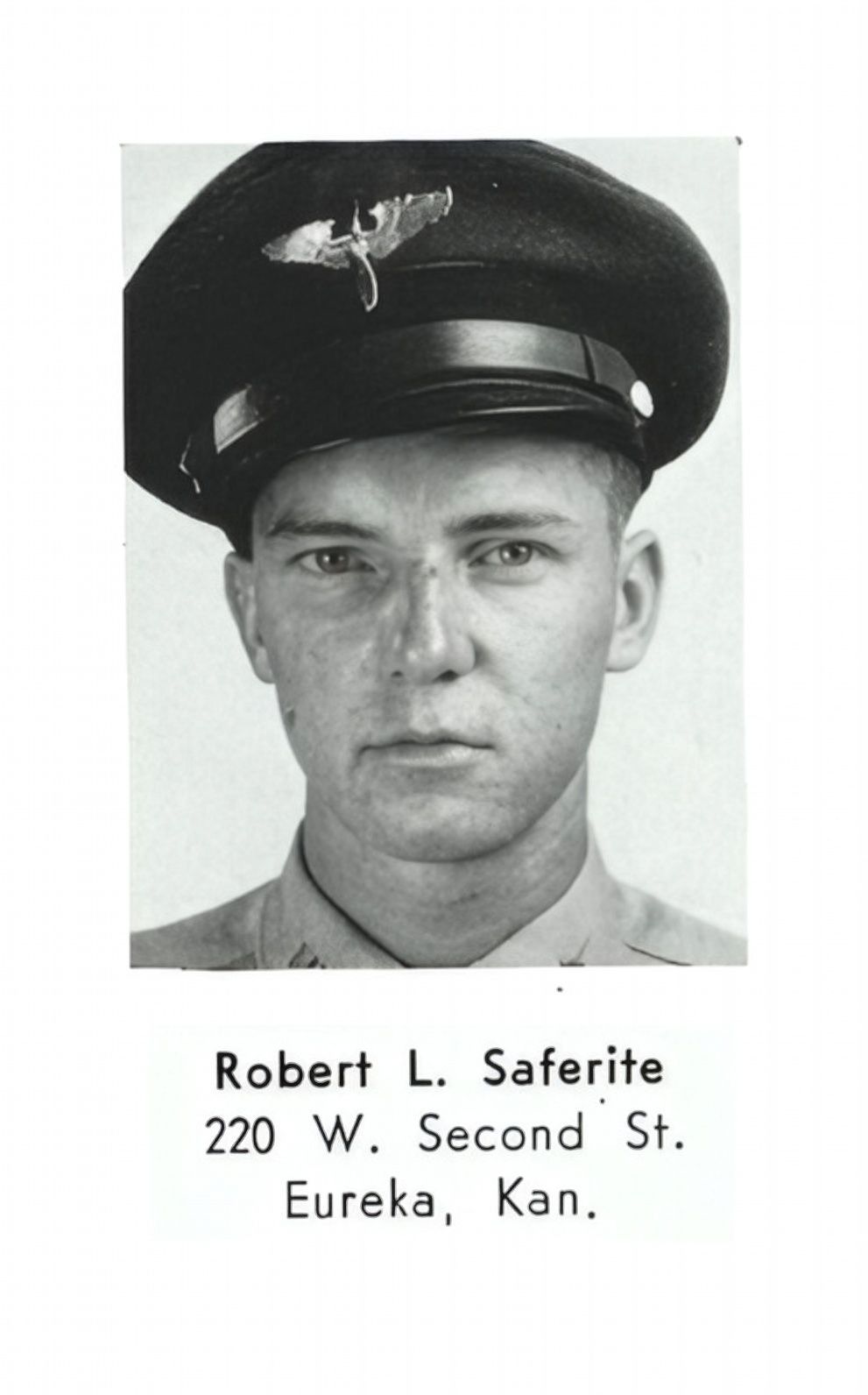
2nd Lt Robert Lee Saferite when he was an aviation cadet
Photo : Military Yearbook Army Air Forces Training Command - 1943
During the dive, one of the Bf 109s was seen losing its tail section and diving towards the ground, out of control. During this fight, one of the American pilots claimed an enemy aircraft ; this was 2nd Lt. Robert Lee Saferite. The disabled aircraft of Ofw. Alois Landsmann crashed near Combourg, on the grounds of the " La Chasse " farm (actually a heavily remodeled 17th-century manor house). Severely wounded, he received first aid on site before being taken initially to the Combourg hospice and then, a few weeks later, admitted to the Grand Seminary in Rennes. After the Allies liberated the region, his wife managed to travel from Germany to see him one last time. Having suffered terribly from his serious injuries, Alois Landsmann died on November 25, 1944.
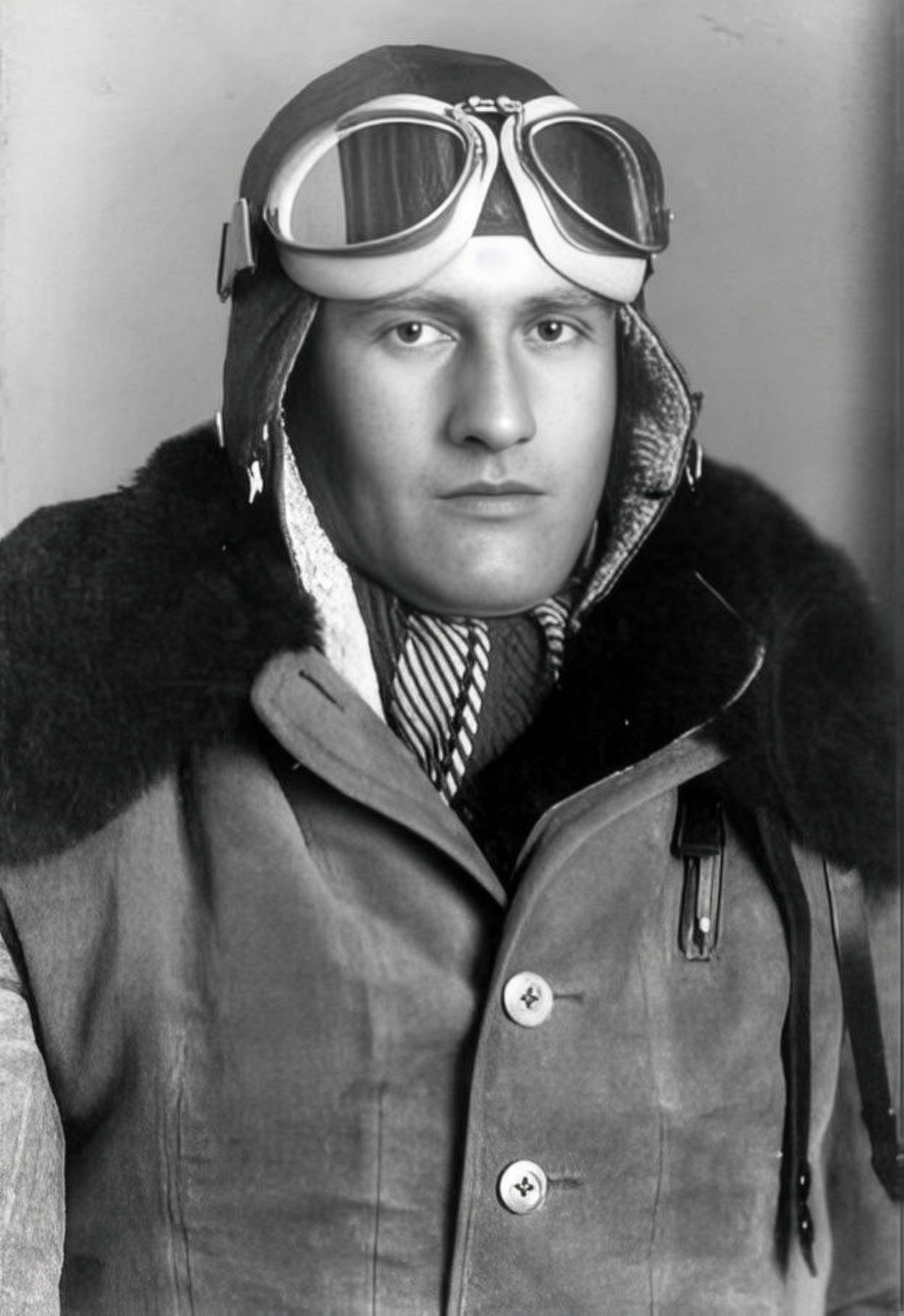
Alois Landsmann
Photo : Ralf Schnitzler
Alois Landsmann, born in Sulzbach, Bavaria, on June 7, 1915, was an experienced pilot who had previously flown Henschel Hs 126s and Focke-Wulf Fw 189s with Aufklärungsgruppe 32, having flown some 270 operational sorties over the Eastern Front by the summer of 1943. He held, among other decorations, the Ehrenpokal (Cup of Honour), the Deutsches Kreuz in Gold (German Cross in Gold), the Frontflugspange für Aufklärer (Observer's Bar for Operational Flights), and the Eisenkreuz I. Klasse and 2. Klasse (Iron Cross 1st and 2nd Class). Alois Landsmann is now buried in the German military cemetery at Mont-d'Huisne in the Manche department.
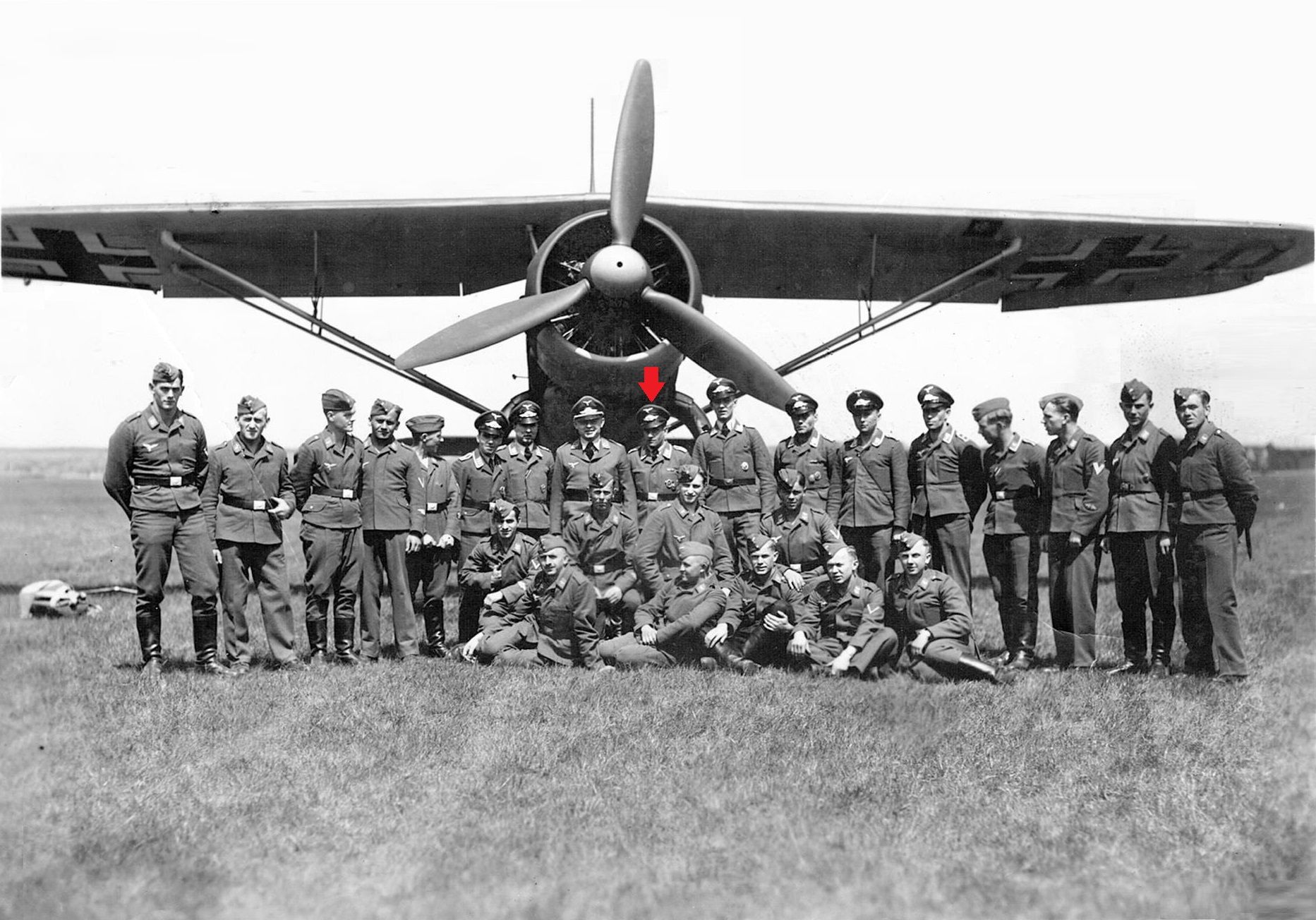
Alois Landsmann (red arrow) in front of a Henschel Hs 126 when he was with the 7.(H) 32 on the Eastern Front.
Photo : S.M. collection (Deutschland)
SOME PHOTOS OF NAGr. 13
(collection Jean-Louis Roba).
Oberfeldwebel Alois Landsmann belonged to Nahaufklärungs-Gruppe 13, 3. Staffel (3rd Squadron of Reconnaissance Group No. 13), a type of unit somewhat less well-known than the famous " Jagdgeschwader ". Below are some photos of members of this unit.
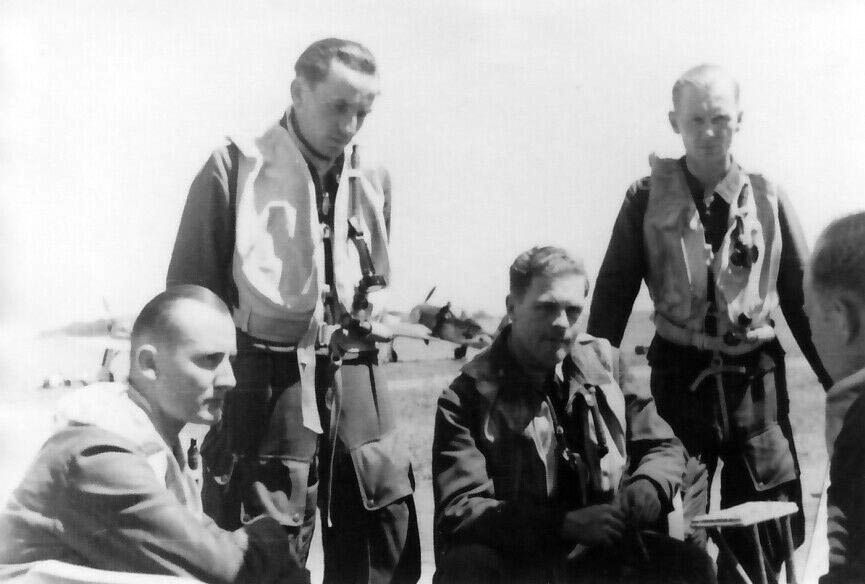
Oblt. Johannes Settgast, Oblt. Herbert Sell (t 15.10.43.), Oblt. Ludwig Klink, Fw Gütler de la 2. Staffel à St Brieuc.
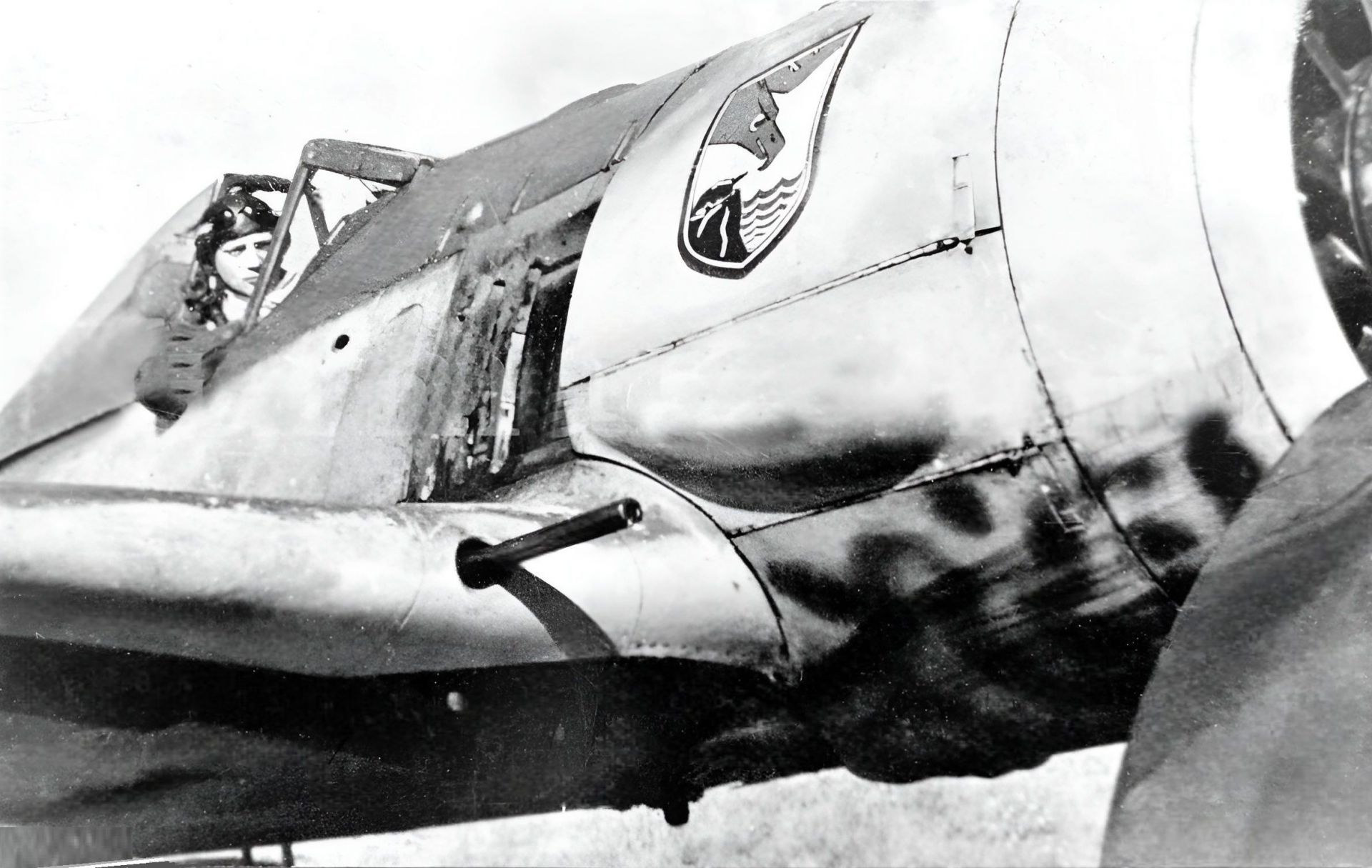
L'insigne de la 2. Staffel NaGr.13 sur un Focke-Wulf Fw 190.
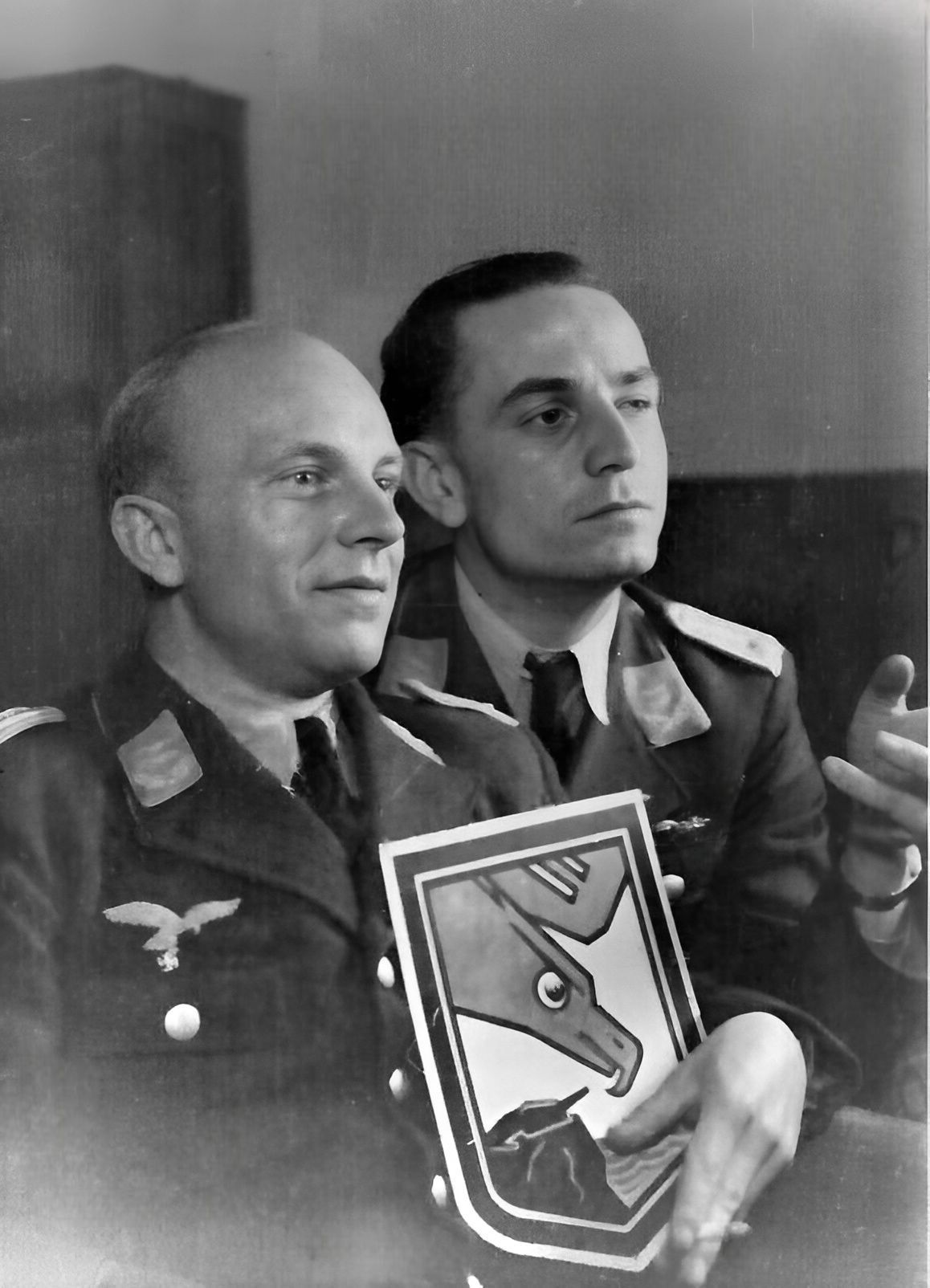
L'Oblt. Meyer et l'Oblt. Shell arborant fièrement l'insigne de la 2. Staffel NaGr.13.
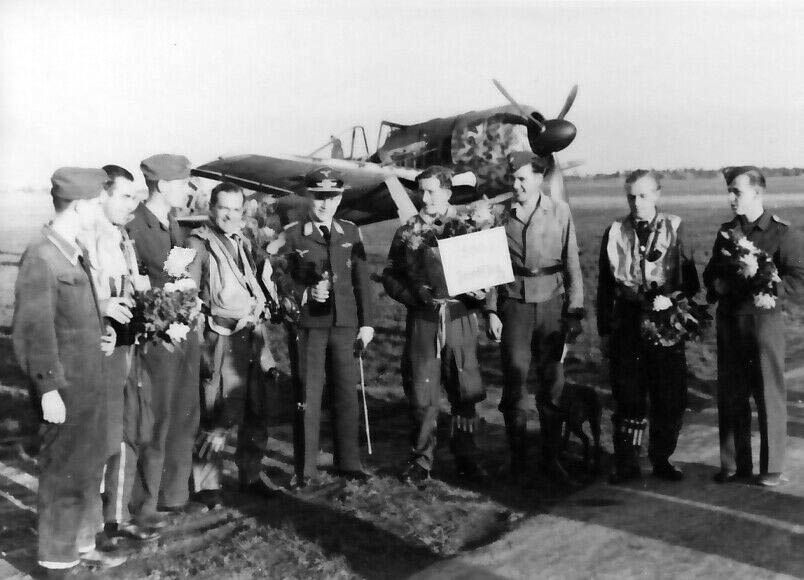
Des membres de la 2./NaGr.13 devant un Focke-Wulf Fw 190.
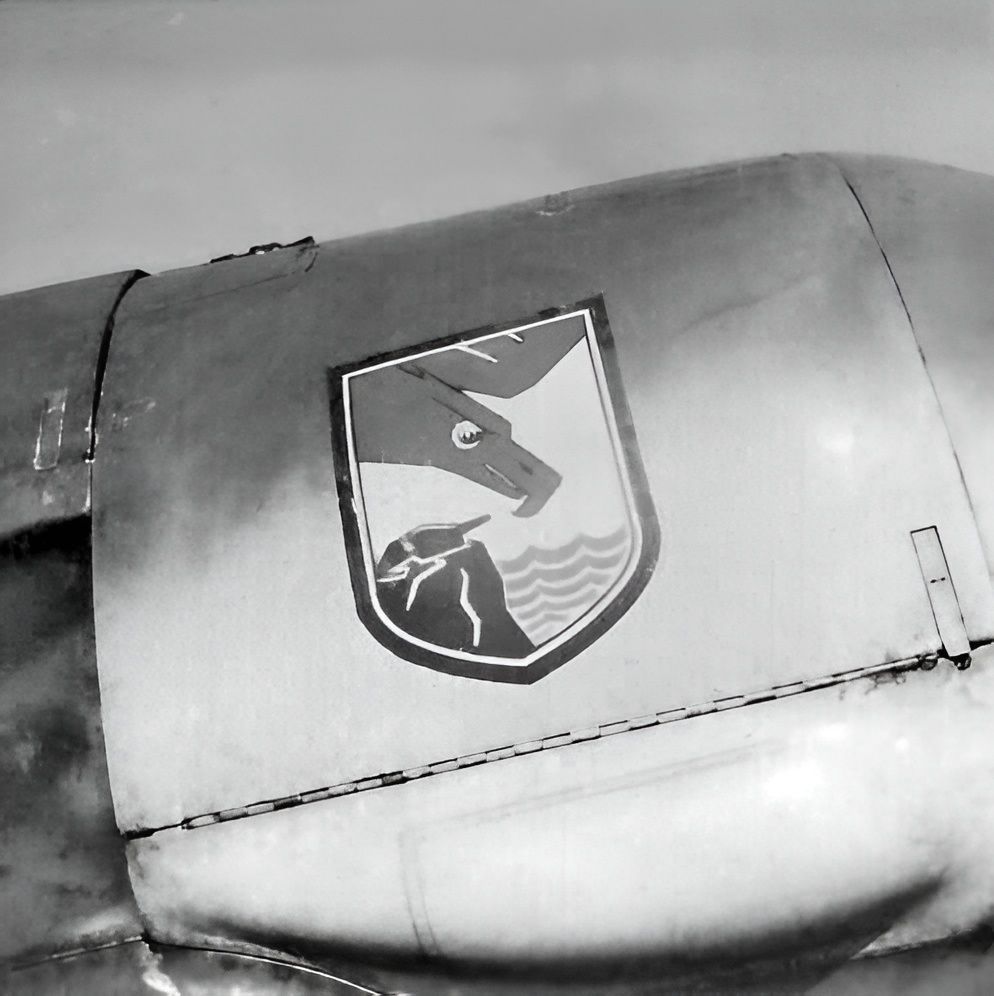
L'insigne de la 2. Staffel NaGr.13 sur un Focke-Wulf Fw 190 en noir et blanc...
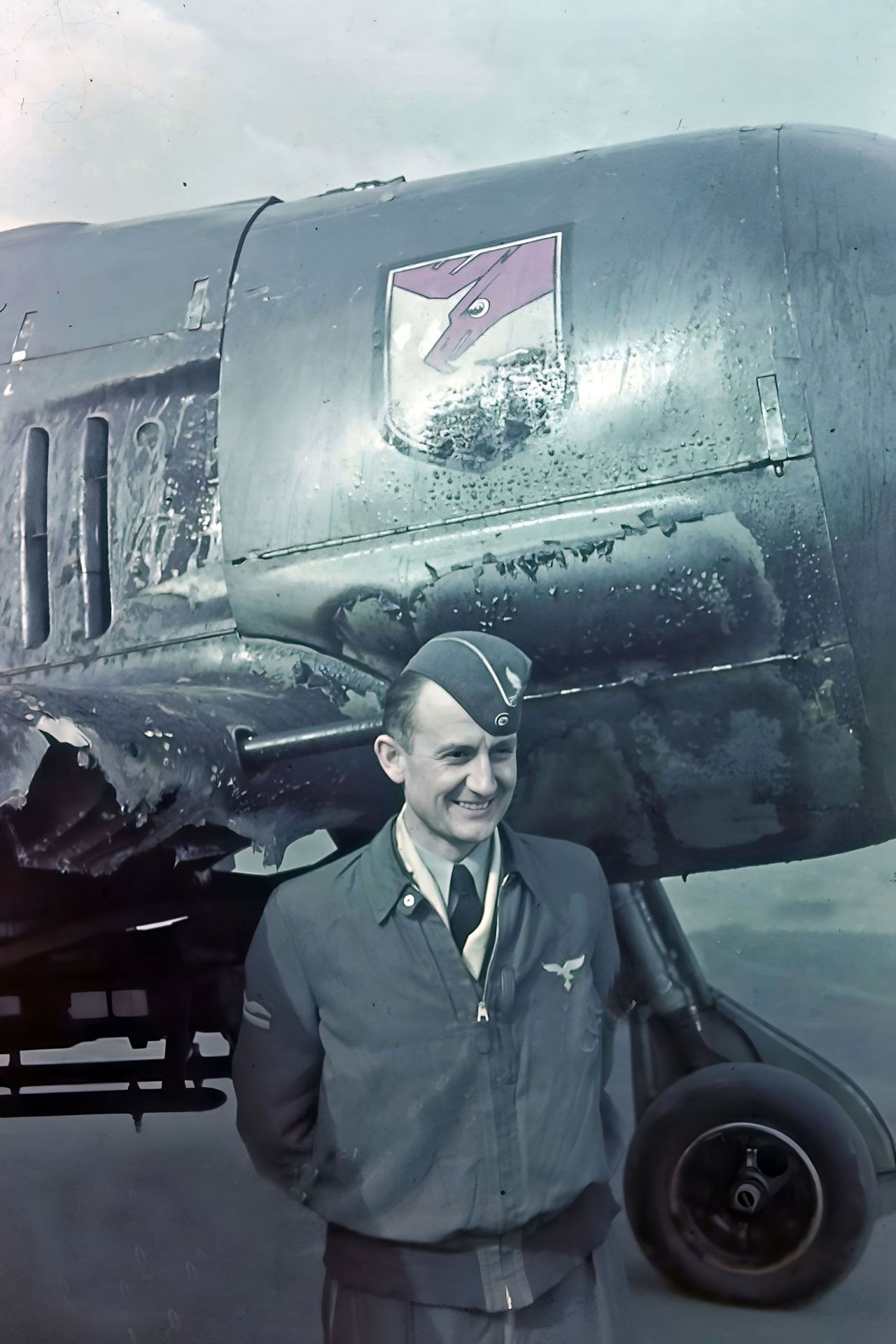
... et en couleurs.
IN MEMORIAM
• Alois Landsmann's obituary
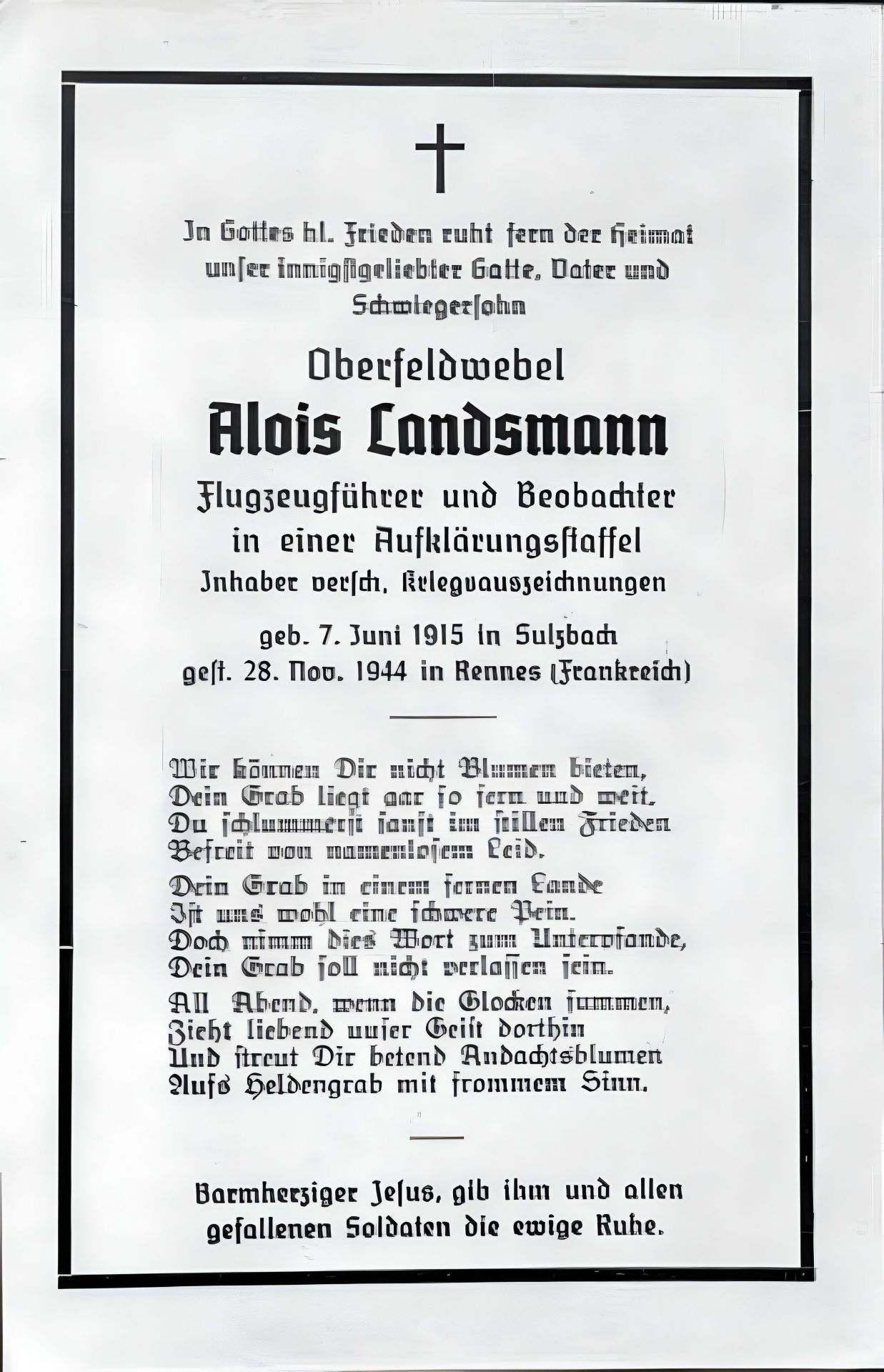
Collection Jean-Louis Roba
Sources :
- La Luftwaffe face au débarquement allié – Jean-Bernard Frappé(Heimdal)
- Verrat in der Normandie - Friedrich Georg (Grabert) -
- Magazine Normandie 1944 de janvier 2013 - Article Nous étions là ! https://www.ww2.dk/
- 365th Fighter Squadron in World WarII: In Action Over Europe with the P-47 - Kent D. Miller
Ajouter un commentaire